Kelburn Viaduct
1931 Opening
A silk ribbon tied across the much-anticipated new Kelburn viaduct was cut by Mrs Annie Troup, the wife of Mayor George Troup, with a pair of golden scissors on 2nd May 1931. Thirty years of service by the old timber viaduct had come to an end. A modern, concrete, streamlined structure ushered the Mayoress in the inaugural car over the 65ft high span above Glenmore Street. On reaching the Northland side, Mrs Troup cut the second ribbon and the crowd of 2,000 then swarmed across from both sides.
‘The new bridge is a very handsome addition to Wellington’s utilitarian structures.’
(‘New Viaduct.’ Dominion, 2 May 1931, p6)
The original timber trestle structure had provided a vital transport connection. It was designed by engineer James Fulton in about 1900. Fulton also designed the Kelburn and Karori Tramway (Cable Car). By the 1920’s, the structure’s safety was being questioned and the width did not comfortably accommodate the new era of the motor car. Although regarded as obsolete, and uncomfortable with its sharp bend, it was an impressive structure for its era. It was demolished within about two weeks of the new viaduct opening.
The new Kelburn Viaduct was designed by the City Engineer, Mr George A. Hart. In December 1929, the tender of Walter Hodges was accepted for £21,439. This included demolition of the old viaduct.
Only a few modifications have been made to the viaduct since it was built. The classical balustrades were demolished and replaced in 1972 with solid, ribbed concrete panels. Later globe light fittings replaced the originals on their art deco inspired standards. These globes were replaced again in 2014 with the present Victorian style fittings which are not terribly sympathetic to the original Art Deco design. The southern pedestrian footpath was removed to increase the road width.
On 5th August 2026, the Minister for the Environment opened consultation to modify the heritage provisions in the Wellington District Plan at five locations, including the Kelburn Viaduct and the nearby Karori Tunnel. The change is being considered as the local plan provisions ‘are found to negatively affect economic growth, development capacity, or employment.’
The Economic Assessment of Heritage Regulation in Wellington appended to the supplied investigation report states that the current heritage listing creates additional costs to the ratepayer for consenting any routine maintenance work. The report adds that the listing also makes it more challenging to upgrade the infrastructure.
However, sympathetic alterations can be achieved through the Resource Management Act. This heritage structure should be looked after by the city, with well-considered modifications where they are thought necessary. The heritage listing provides this safeguard.
If you would like to read the report in full and provide your own feedback, the link is below. Submissions close 19th August 2026.
References:
www.wellingtoncityheritage.org.nz
https://www.heritage.org.nz/list-details/3333/Listing
(1931, May 2). New Viaduct. Dominion. 6.
(1931, May 2). Official Opening. Evening Post. 10.
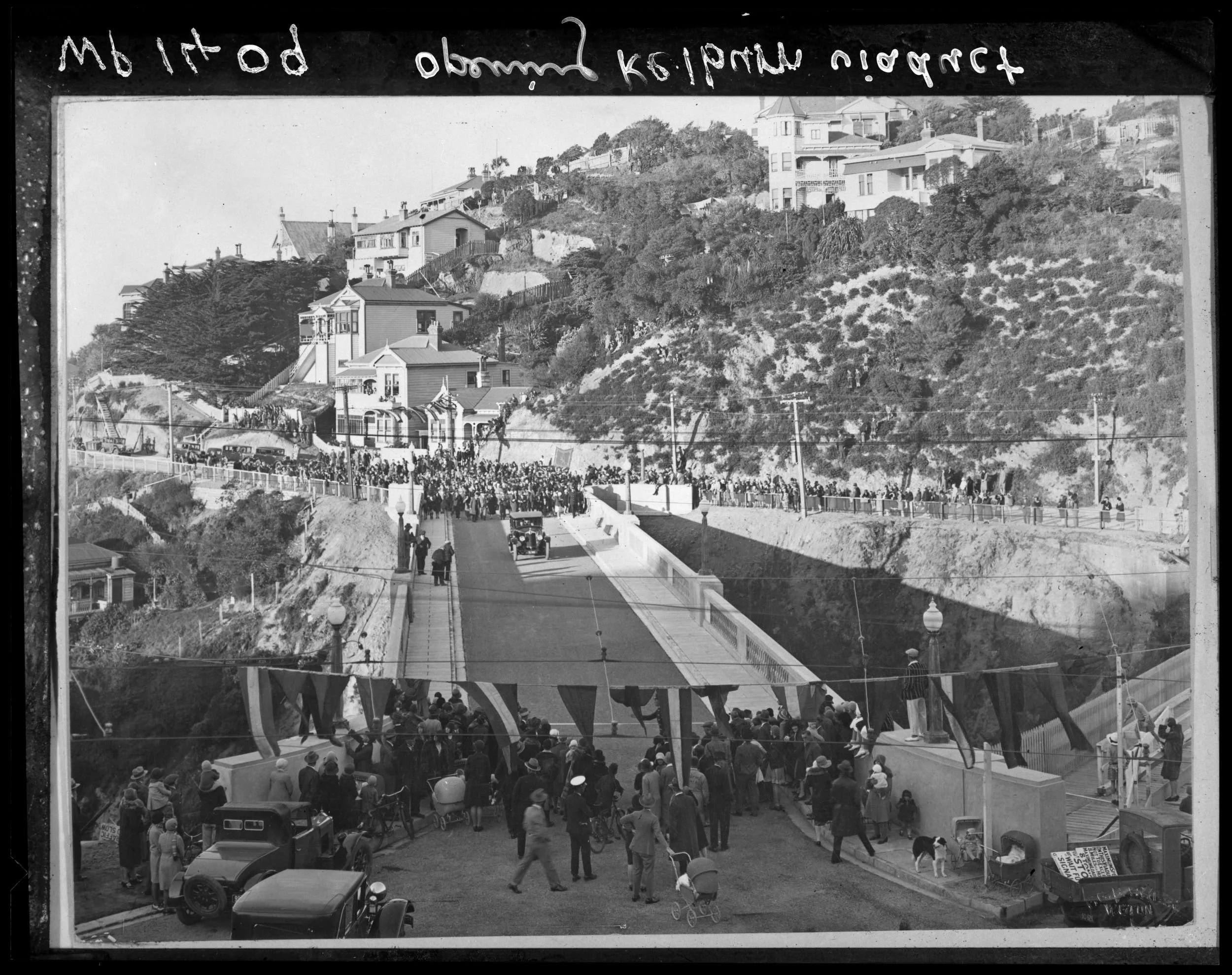
Crowds of people watch as the first car travels over the newly opened Kelburn Viaduct, May 2. (Photographer: FG Barker). Wellington City Council Archives, 00138-1409.
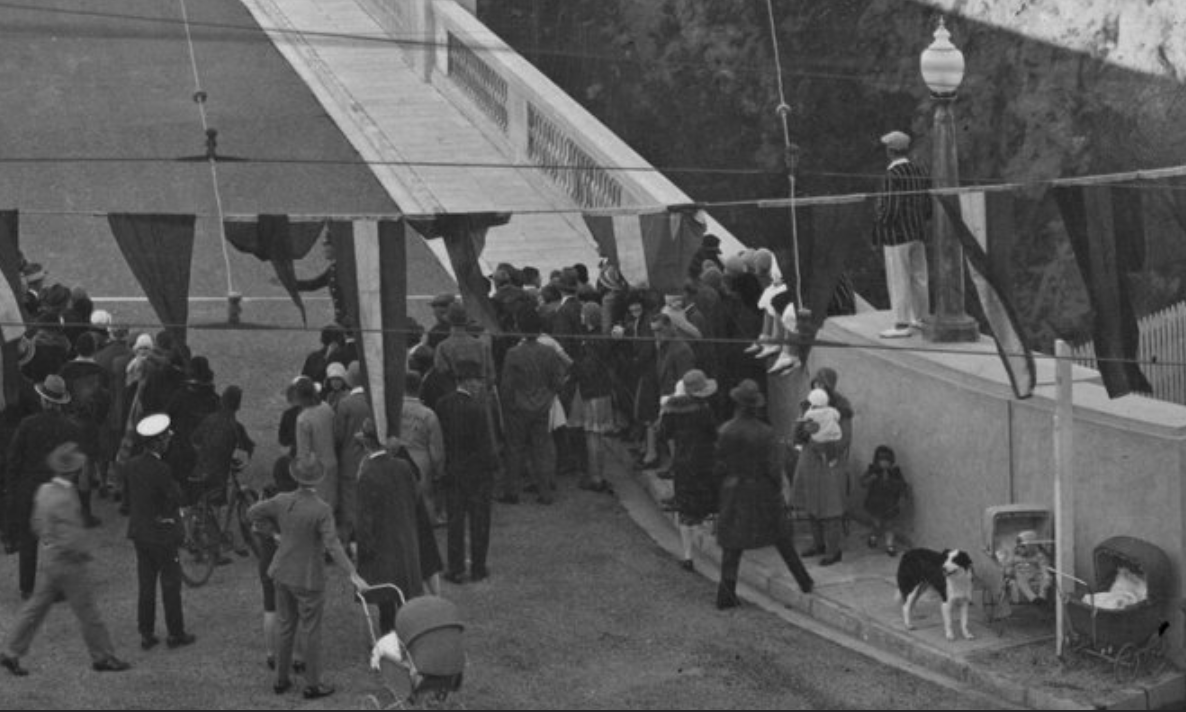
Detail from above image
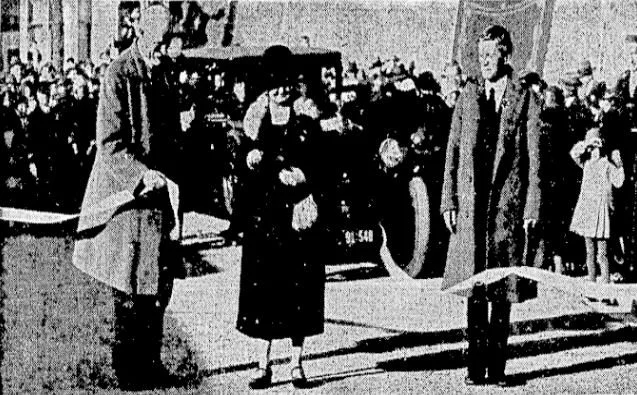
Cutting the Ribbon.—The Mayoress, Mrs. G. A. Troup, photographed just as she had cut the silk ribbon across the new Kelburn Viaduct, at the official opening cere mony on Saturday afternoon. The ribbon was cut with a pair of golden scissors, the gift of the two, daughters of Mr. W. Hodges, the contractor. On the left is Mr. Troup, and, on the right, Mr. Martin Luckie. —"Dominion," photo. 4th May 1931
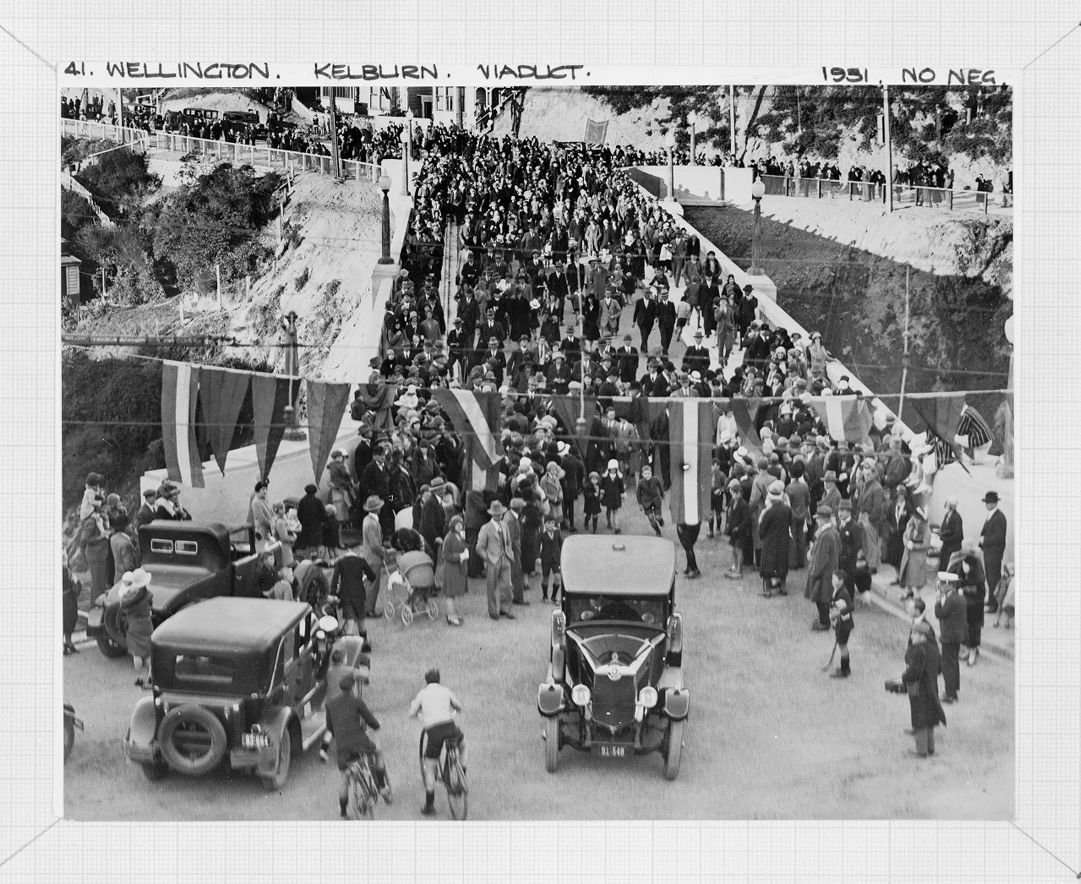
Official opening of the Kelburn Viaduct, Wellington. Evening post (Newspaper. 1865-2002) :Photographic negatives and prints of the Evening Post newspaper. Ref: 1/2-C-005238-F. Alexander Turnbull Library, Wellington, New Zealand. /records/22754636
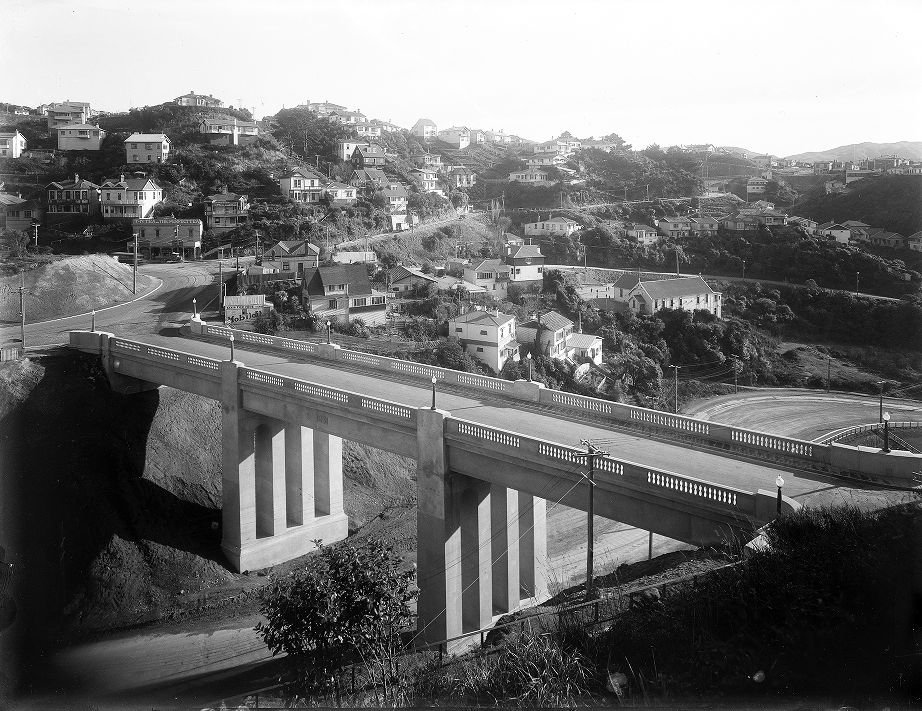
The Kelburn Viaduct in Kelburn, Wellington, with view of houses in the background. Taken by an unidentified photographer on 6 July 1931. Wellington City Council :Negatives of Wellington taken for the Wellington City Council, chiefly by Frank Giles Barker. Ref: 1/1-024304-G. Alexander Turnbull Library, Wellington, New Zealand. /records/22889425
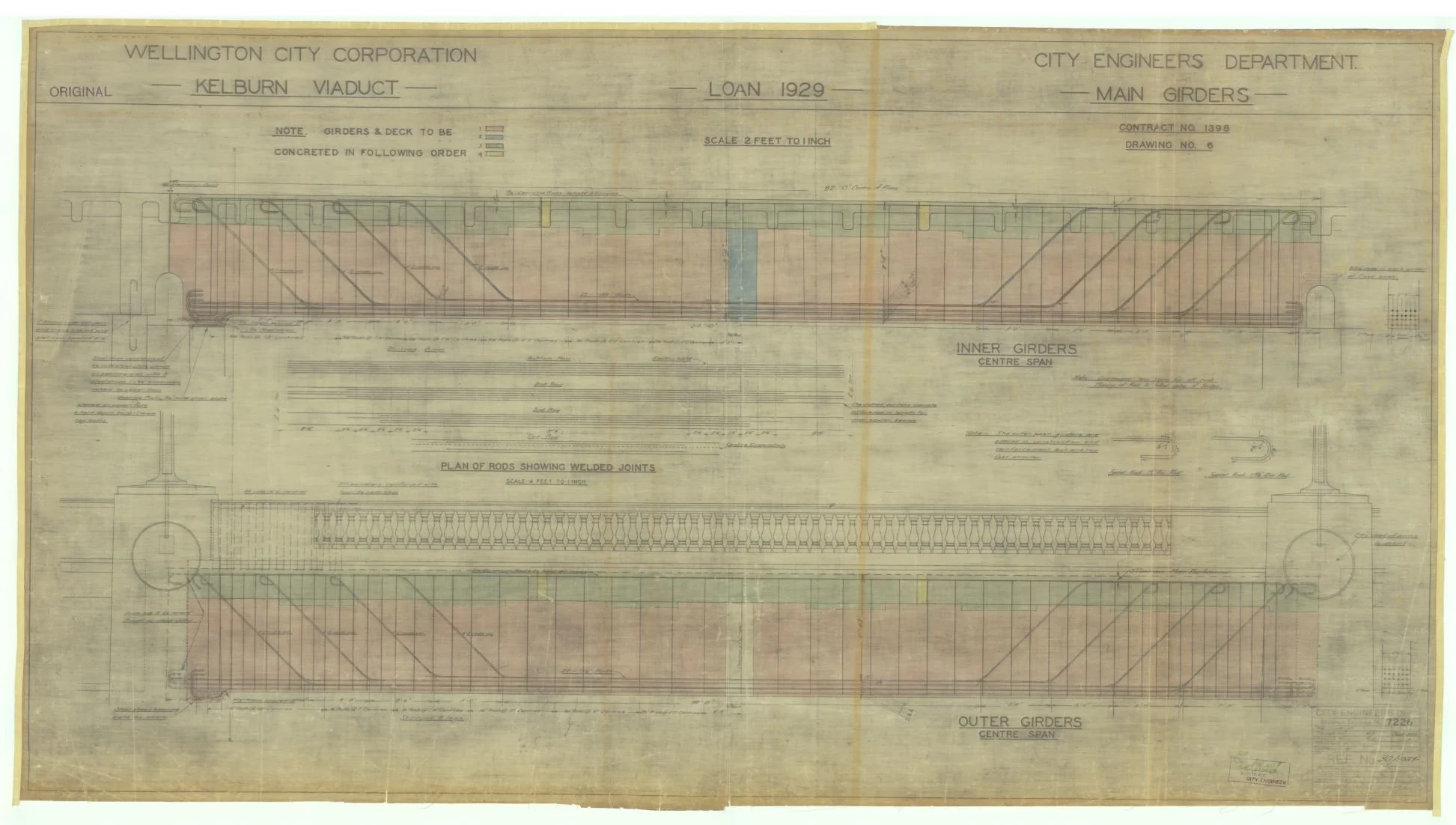
1930. Delineator: City Engineers Department. Commissioning Agency: Wellington City Council. Notes: Annotated to show stages of construction for girder and deck concreting. Wellington City Council Archives, 00237-7226
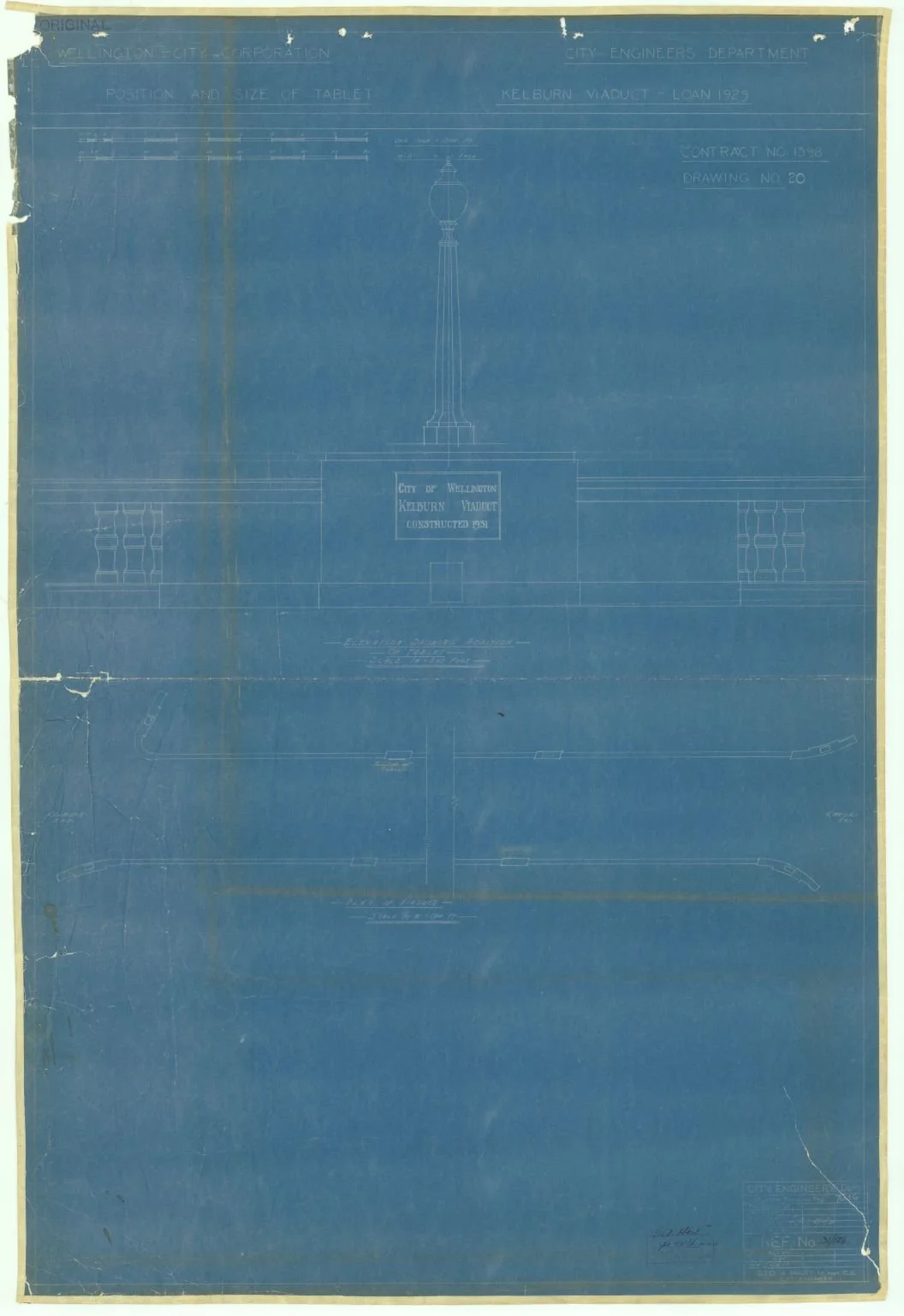
1930. Delineator: City Engineers Department. Commissioning Agency: Wellington City Council. Notes: Additional to original contract. Shows plan view and elevation. Wellington City Council Archives, 00237-7616
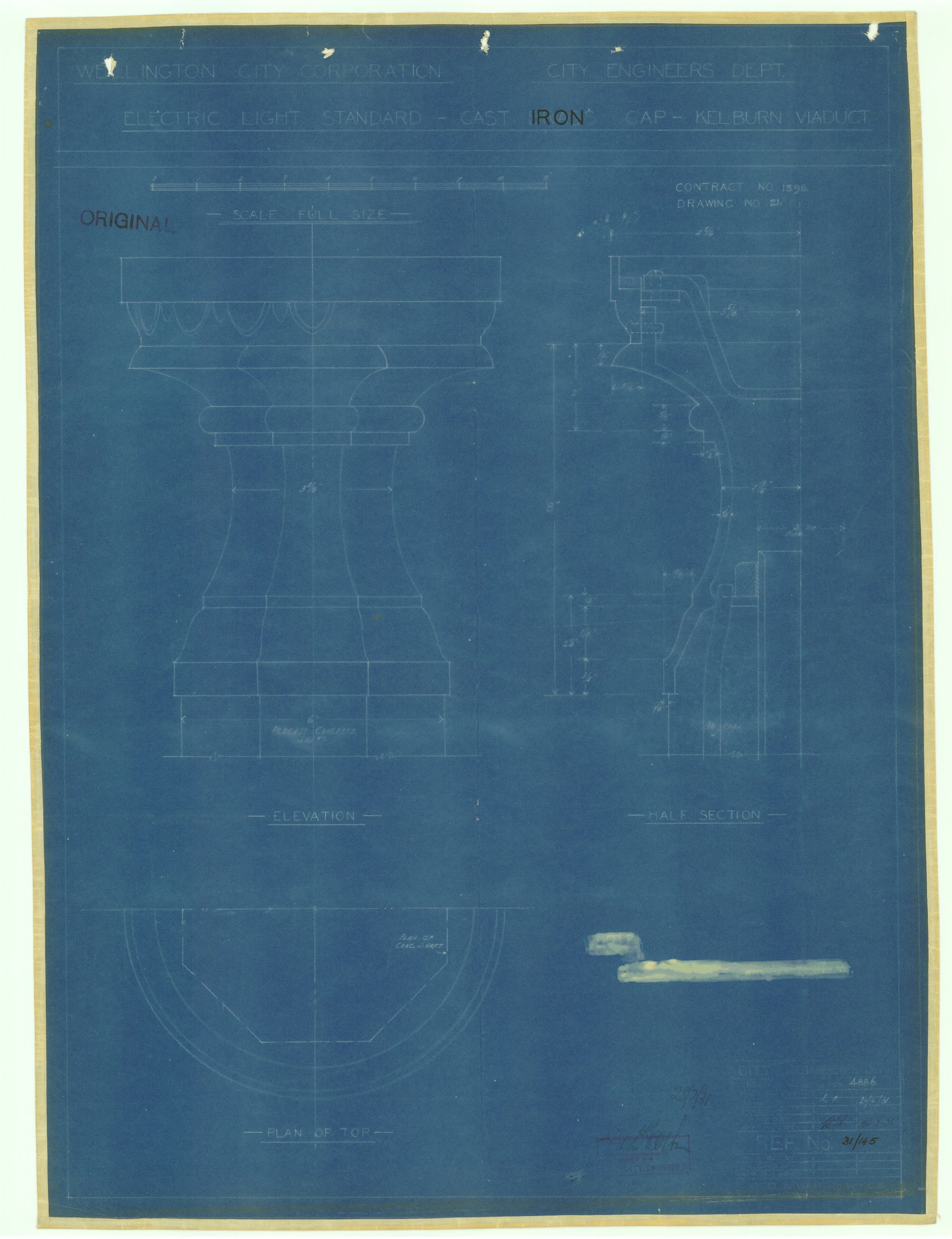
1930. Delineator: City Engineers Department. Commissioning Agency: Wellington City Council. Notes: Additional to original contract. Shows plan view, elevation and half section. Wellington City Council Archives, 00237-4886
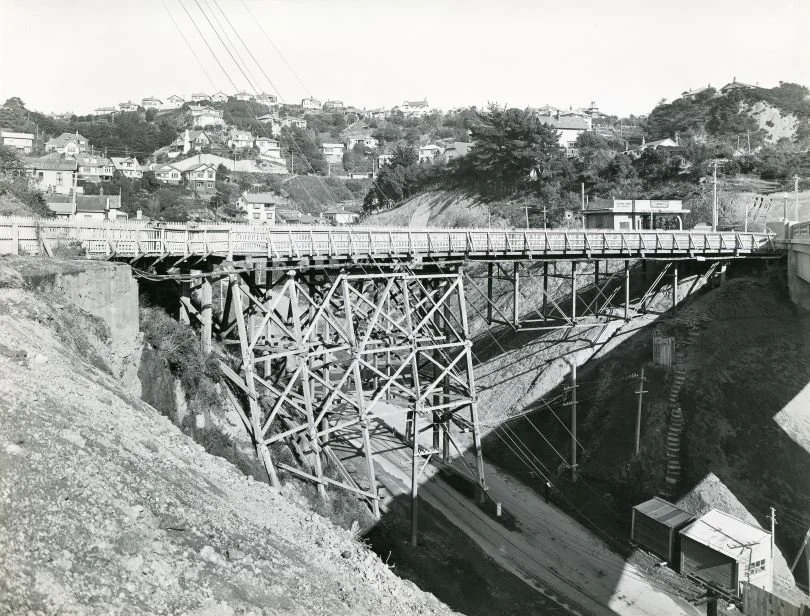
The old Kelburn Viaduct shortly before it was demolished. This was a single-lane wooden structure located slightly south of its 1931 replacement (the shadow of which can be seen in the image. Wellington City Libraries Reference50010-167.
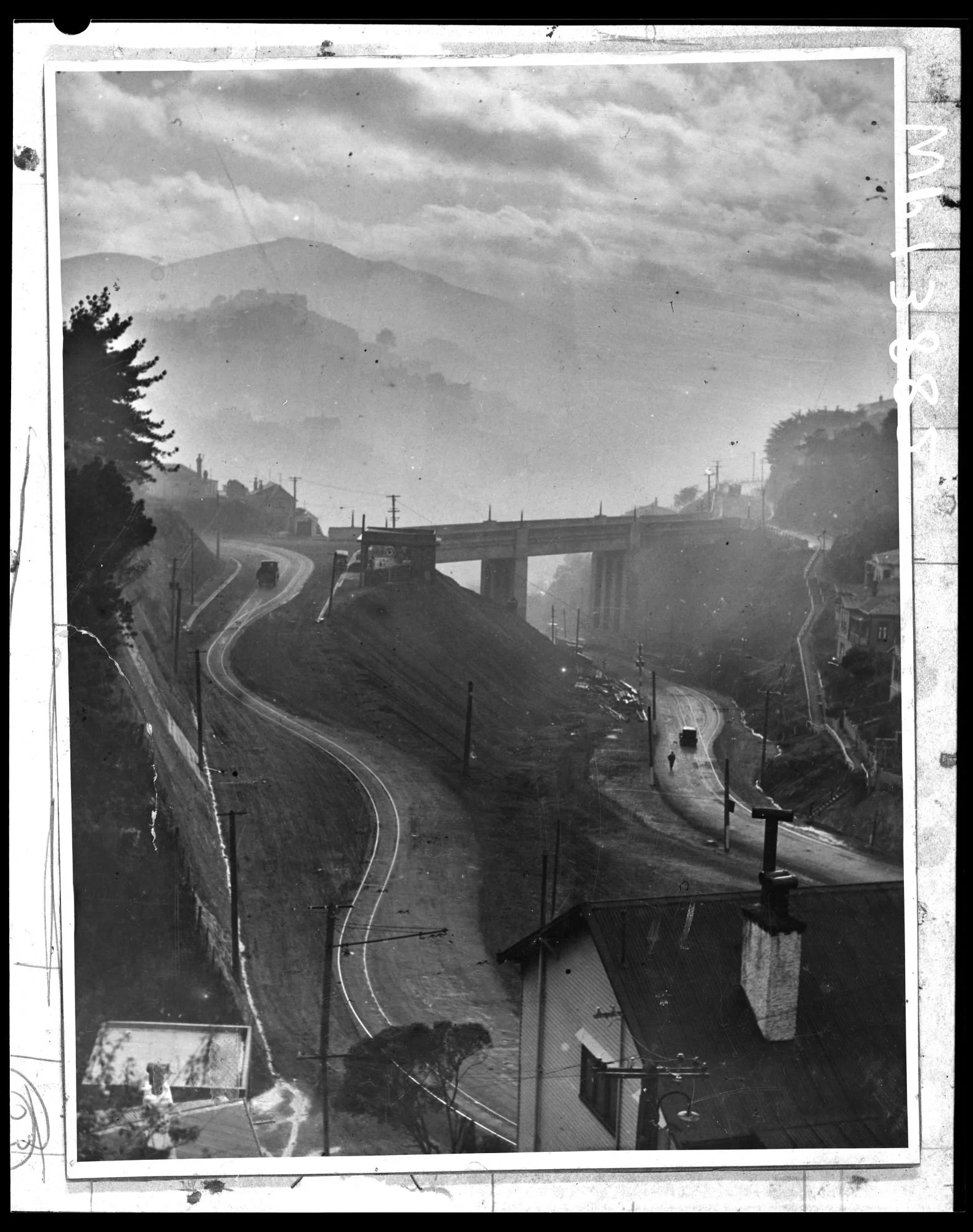
Overlooking Upland Road, leading up to the Kelburn Viaduct. 1950’s. Wellington City Council Archives, 00138-13882
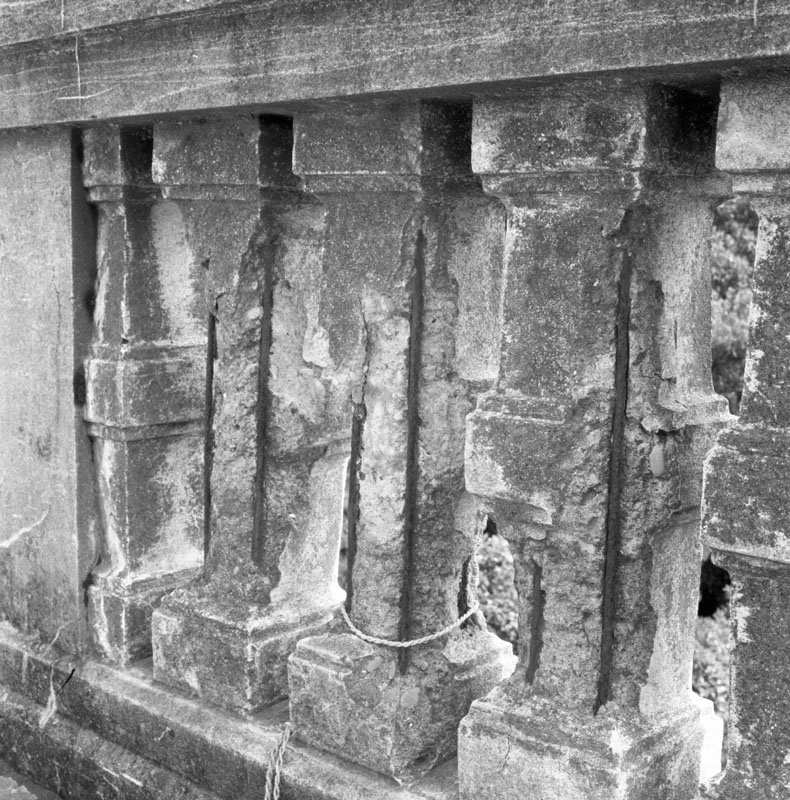
These are the original balusters that were demolished and replaced with the present precast concrete panels. ‘Condition of Kelburn Viaduct, 4 February 1970.’ Wellington City Council Archives, 00158-3950-e (sheet 9824a)
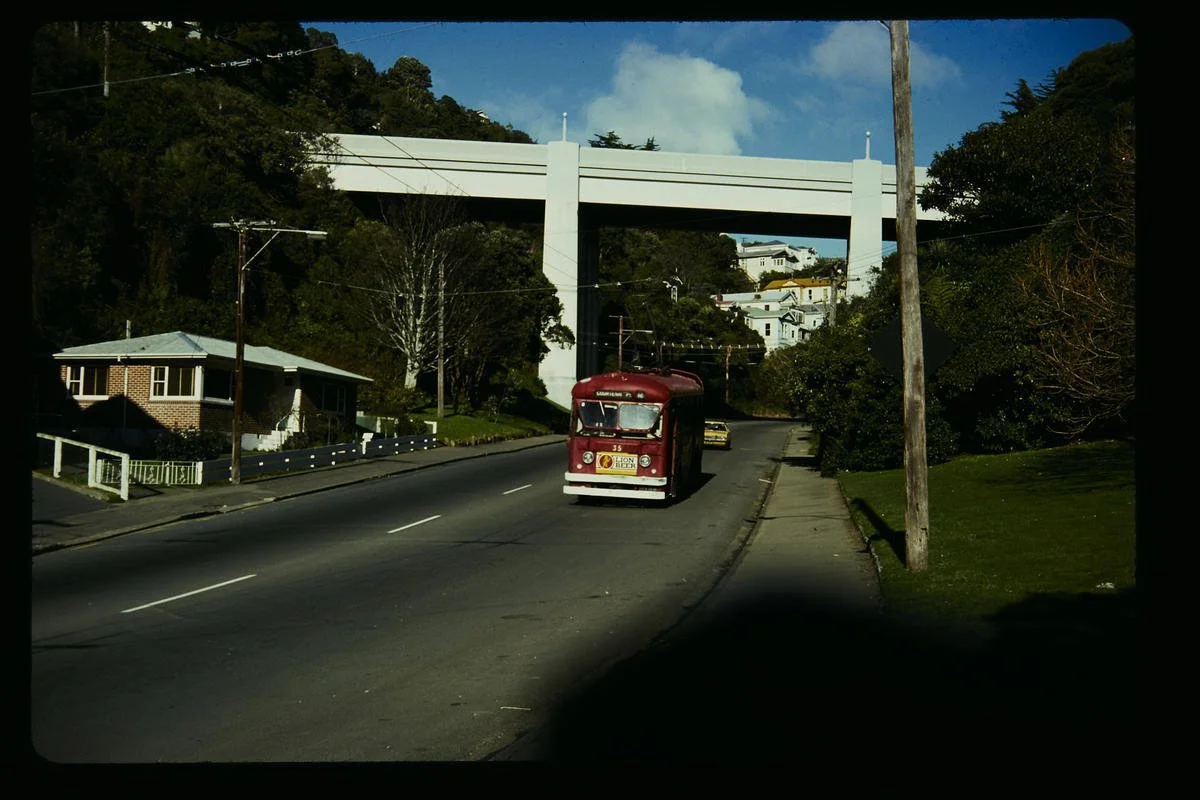
Peter Moses. 1979. Kelburn Route, Kelburn Viaduct Glenmore St, PHO-2017-10.40. Walsh Memorial Library, The Museum of Transport and Technology (MOTAT).