Te Aro Reclamation
1882-1886
Contractor Peter McGrath’s original plan to move fill for the Te Aro reclamation was to build a train line from Polhill Gully to the shore. The city councillors were concerned about the risk and inconvenience of train rails running along Abel Smith and Taranaki Streets. The parties agreed that McGrath would instead reclaim a portion of the shore along Clyde Quay, to allow a train line to move fill from a hill behind the Quay. This work would add a further £3,500 to his £23,000 contract.
A trestle causeway with rails was built out from Clyde Quay and a locomotive purchased from the Wainuiomata tramway. By February 1883, twelve of the 110 spans of the trestle were finished. But by June, the project was in crisis. McGrath became bankrupt and the work stopped. By September, his debt was discharged and he took over the licence of the Star Hotel. A few months later he ran off to Sydney (allegedly with one of his barmaids), leaving an additional £900 in debt behind him.
Pepperell & O’Malley were contracted to complete the project. To make up time, the contractors placed sixty men at the fill excavation site and the replacement locomotive named ‘Pio Pio’ made 35 trips across the trestle each day. In March 1884, a meeting of creditors in the estate of O’Malley and Pepperell was held in the grand jury room of the Supreme Court. They too had failed.
Tendering the contract for a third time, the council only received one valid tender. The tendered price was £62,000. This was rejected and there were numerous debates in council as to how best to proceed. The sea began taking back the little of the land that had been reclaimed, the trestle structure began to fail and stagnant pools would form emitting an unpleasant odour.
In February 1885, tenders were called for a fourth time, albeit with a reduced scheme. Joseph Saunders was the lower of the two tenders received. The trestle was repaired and put back in to use to move the fill. Local children flocked to it as a place to play.
‘They swarm about it in scores, from little toddlers, scare able to walk a dozen steps, to girls of 12 or 14, and promising specimens of the male larrikin species.’ (Evening Post, 15th June 1885).
The play extended to dares and several children would lie with their necks on the rail and only jump off as the engine approached. The newspaper chastised Wellington parents for not keeping their children away from such a dangerous area. No accidents were reported.
Saunders used material from the cliff fronting James FitzGerald’s property behind Te Aro baths (the site is now St Gerard’s Monastery). The area he was contracted to finish was completed in February 1886. The reclamation was expanded in 1889, and then again in 1901. The last reclamation in this area was 1965-66. See the map on the WCC website:
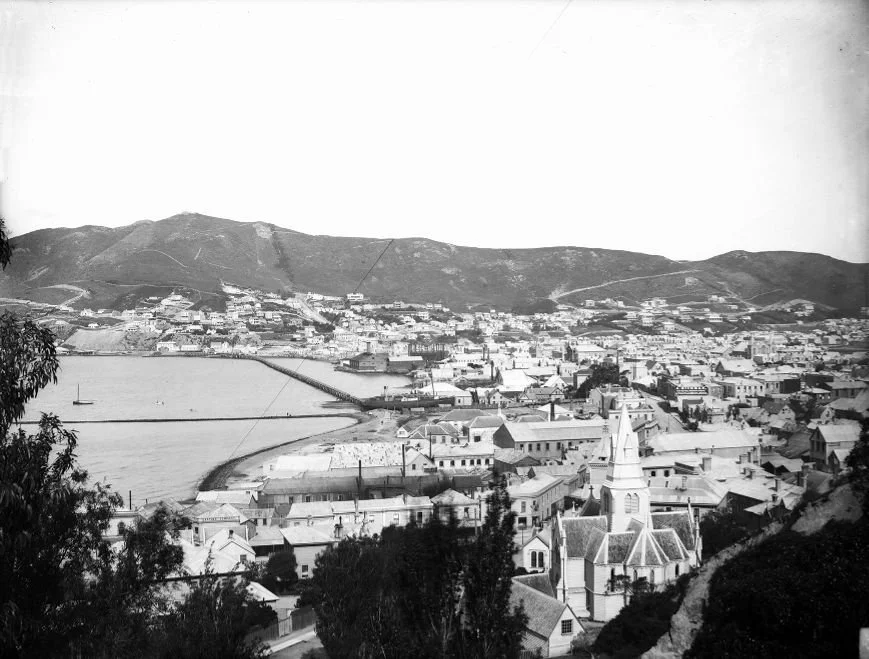
Te Aro, Wellington, New Zealand. Williams, Edgar Richard, 1891-1983: Photographs and papers. Ref: 1/1-025883-G. Alexander Turnbull Library, Wellington, New Zealand. /records/22883810
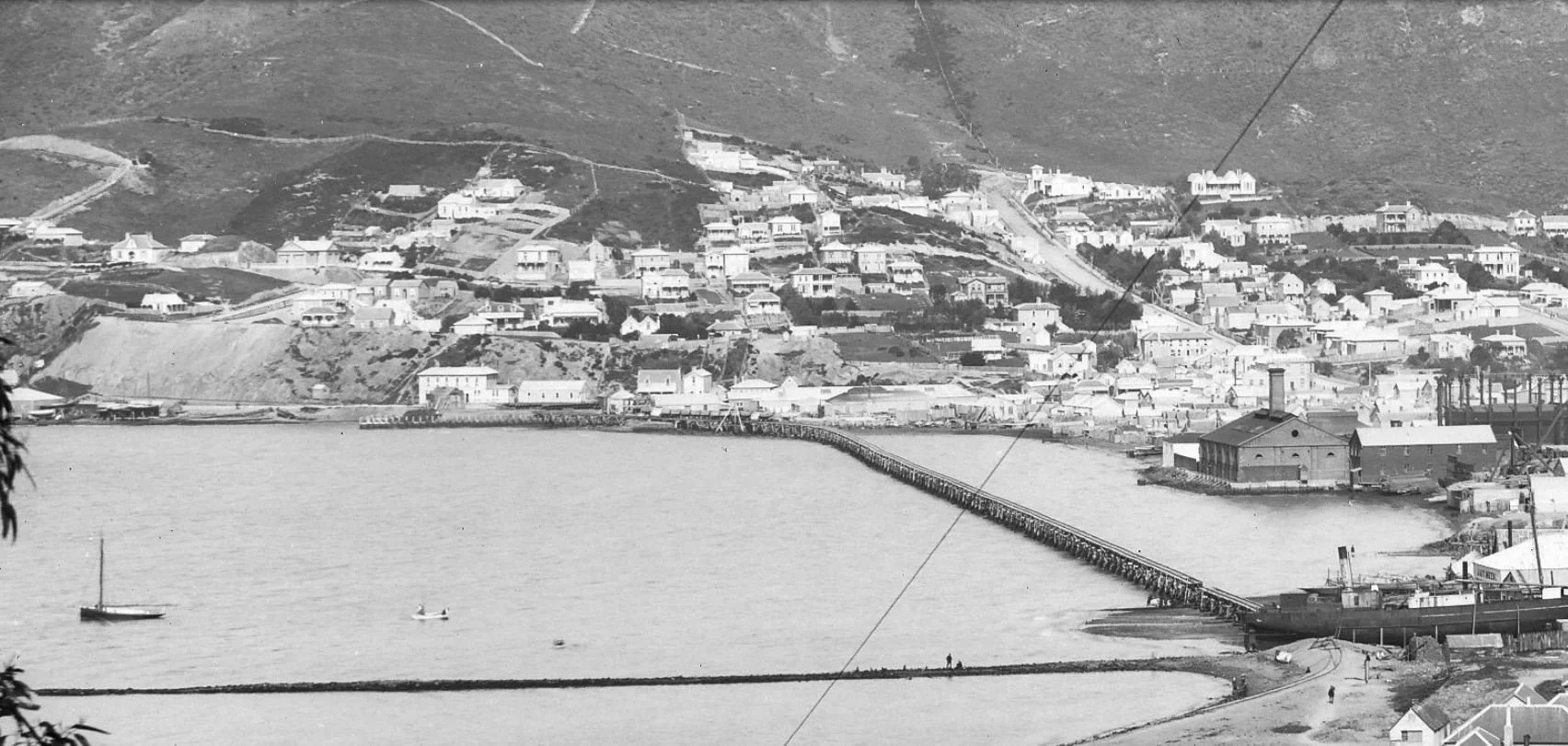
Detail from above image.