‘An Aviation Flight’ 1914
It was a thrilling afternoon for those who gathered to see the first flight of an aeroplane in Wellington. On 25th March 1914, aviator James Scotland, after three days of waiting for the weather conditions to improve, made his attempt. A crowd gathered at Athletic Park to watch the preparations of his imported Caudron biplane named ‘Blue Bird.’ This flight was part of a national tour for New Zealand Aviation Ltd. His first flight was taken between Invercargill and Gore the previous month.
At 3pm, donning a coat and helmet, Scotland climbed into his seat and the engine was started. He motored across the grounds to one corner - in order to have the longest possible length on the diagonal for his take off. The engine sped up and his aeroplane started across the park and the crowd applauded as it gently began to rise.
Scotland was soon flying above Berhampore when he turned with a steep bank intending to return to his starting point. The wind was described as being ‘utterly treacherous, being broken into descending currents, eddies, and puffs.’[i] The wind caught the aeroplane, threatening to drive him into houses on the hill ahead. Scotland took the plane higher in an effort to avoid the houses which he succeeded in doing. But the gusty conditions could not be overcome and he crashed into the top of a big pine tree on the hedge of Newtown Park facing Russell Terrace.
‘There was a momentary hush, then a hurried movement towards the exits, and soon the streets leading to the scene of the accident were thronged.’ (An Aviation Flight, Wairarapa Age, 26 March 1914, 5).
Scotland walked away from the accident with only a sprained thumb. But the aeroplane framework was smashed and the canvas badly torn. The motor was undamaged.
In 1915 Scotland enlisted with the Royal Flying Corps and was deployed to the Persian frontier. He received a medical discharge in 1916 and returned to New Zealand.
On 23rd November 1917 Scotland married Ivy Isabel Stewart in Wellington. Stewart was a talented singer and performer. She was 17 years old when she married and Scotland was 26 years old. The couple then travelled to Los Angeles where their daughter Zelda Mary was born in June 1918. For unknown reasons they left Zelda with a family in California and returned to New Zealand.
A second child was born in 1919 in Palmerston North named William Raymond. But by then the couple were living apart. Ivy then moved to Sydney and in 1923 was before the Court for vagrancy. William was placed into foster care. No further trace can be found of Ivy.
In 1919, Scotland left the aviation industry and joined an insurance company. He settled in Auckland and he lived with Mabel Louisa Kennerley who represented herself as his wife, Scotland not being legally free to remarry. The couple moved to Australia in 1936 and Scotland died in 1963.
References
An Aviation Flight. (1914, March 26). Wairarapa Age, 5.
No title. (1914, July 7). Evening Post, 6.
Women In Print. (1917, November 27). Evening Post, 9.
Airplane Fatality. (1919, February 3). Sun, 4.
New South Wales Police Gazette 1923
https://en.wikipedia.org/wiki/Will_Scotland
[i] Scotland’s Luck First Wellington Flight Ends in Disaster. (1914, March 26). Evening Post, 3.
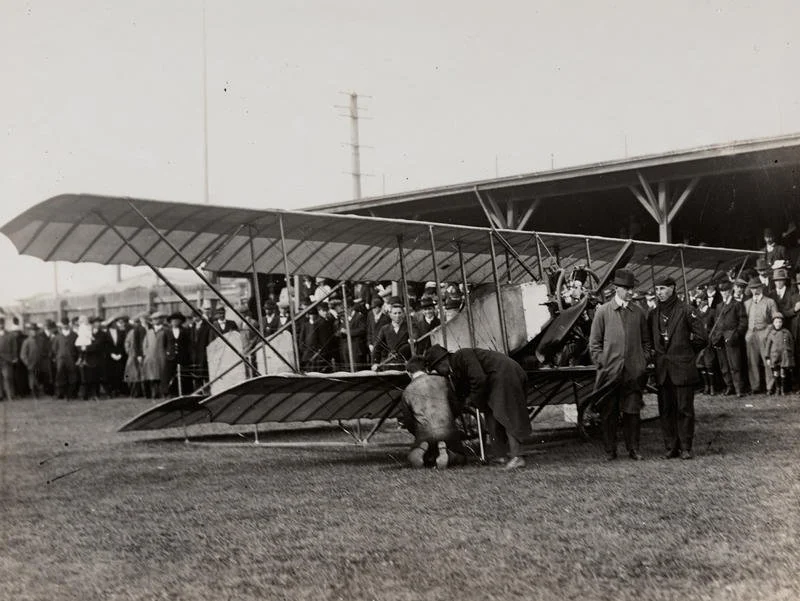
J.W.H. Scotland and his Caudron biplane at Wellington.
Sydney Smith. Unknown. J.W.H. Scotland, 15-1335. Walsh Memorial Library, The Museum of Transport and Technology (MOTAT).
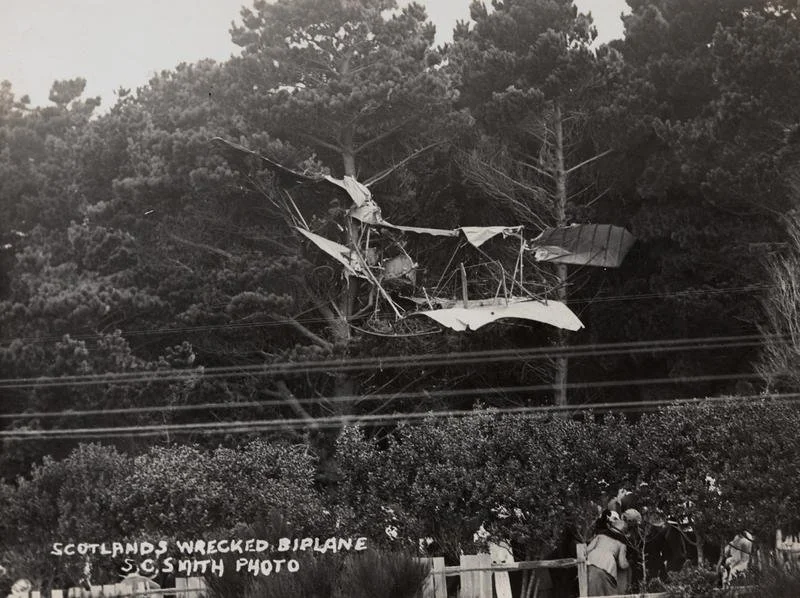
A view of J.W.H.Scotland's crashed aeroplane in a tree, Wellington.
Sydney Smith. Unknown. J.W.H. Scotland, 15-1329. Walsh Memorial Library, The Museum of Transport and Technology (MOTAT).
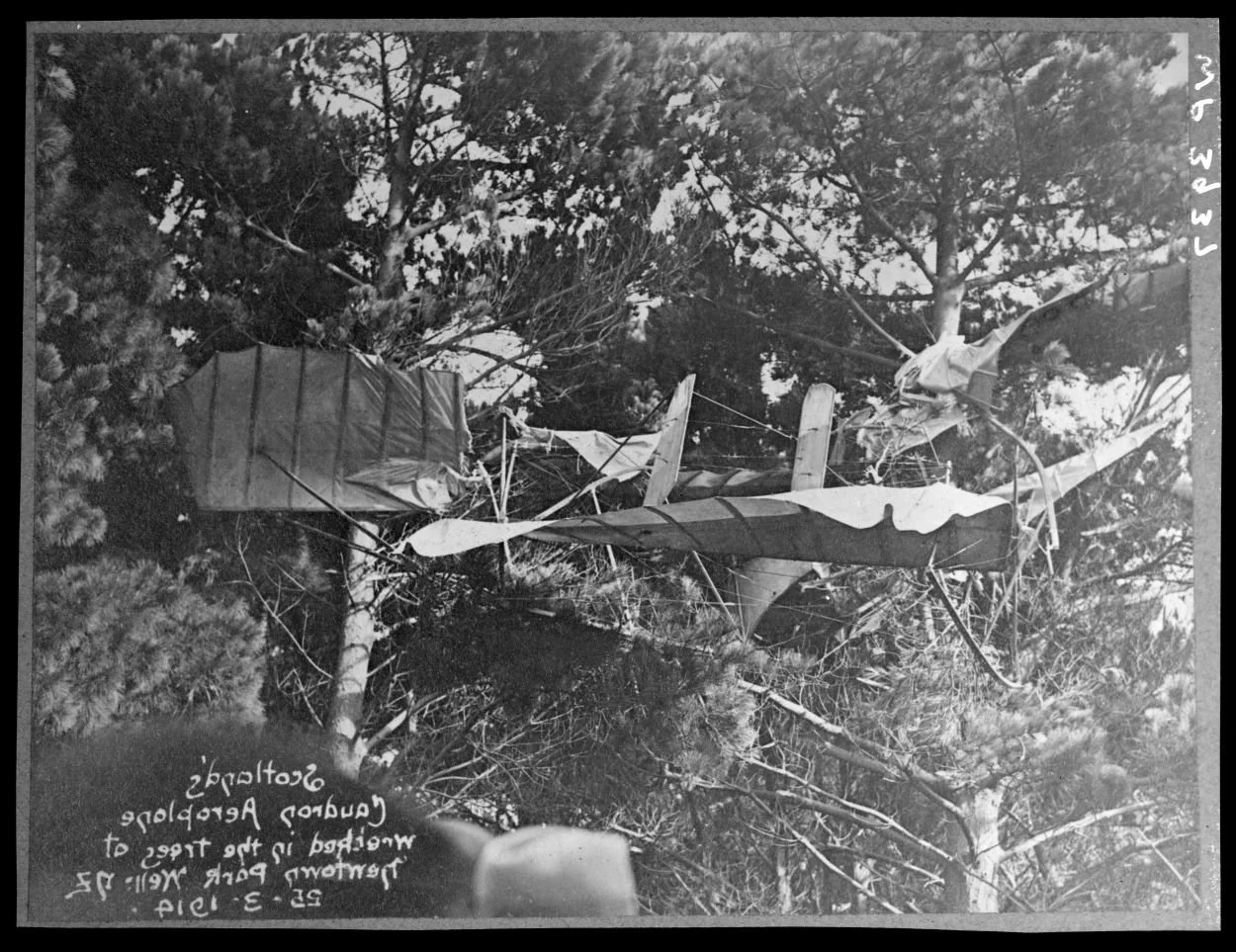
J W H Scotland's Caudron Biplane wrecked in trees at Newtown Park, 25 March 1914.
Wellington City Council Archives, 00138-3937
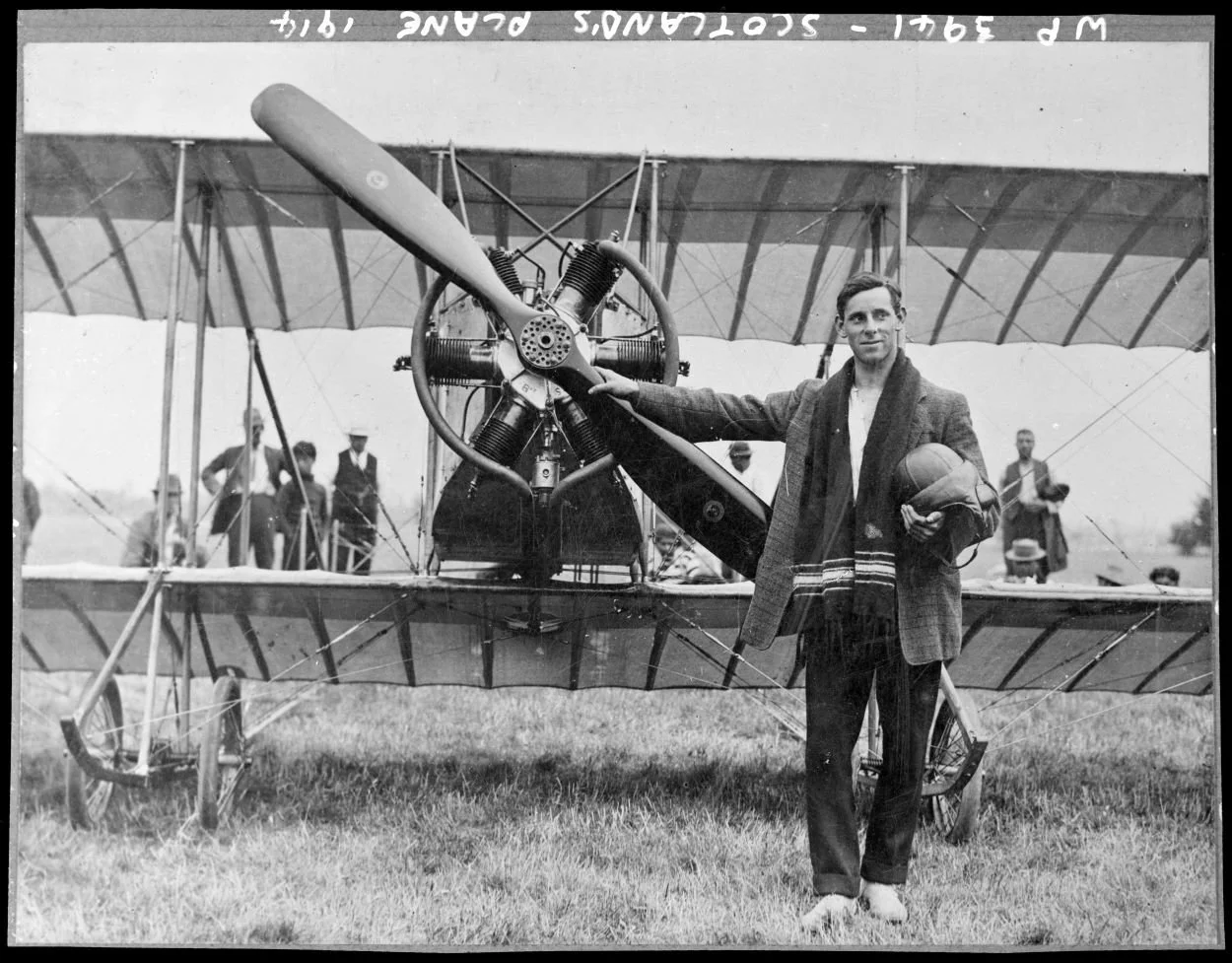
J W H Scotland's Caudron Biplane, Otaki Racecourse 1914.
Wellington City Council Archives, 00138-3941